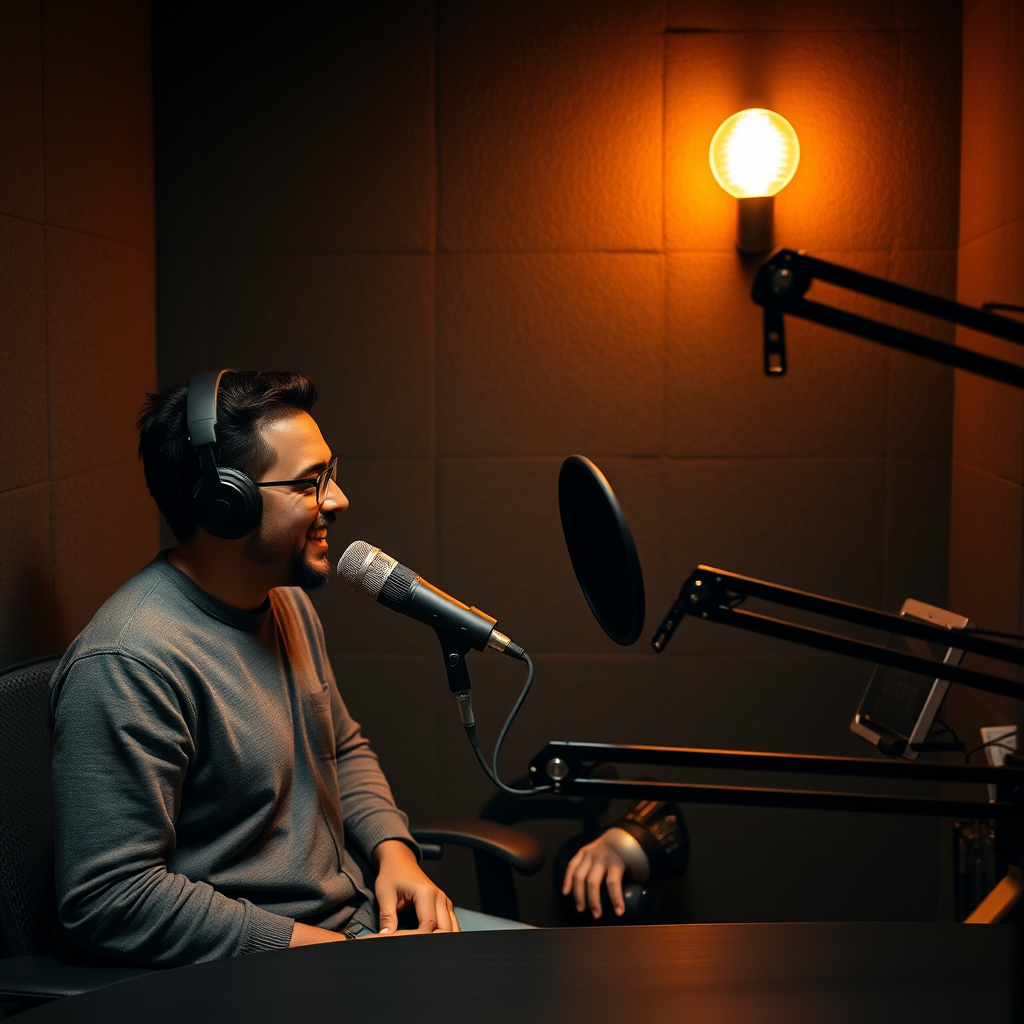
A live taping is not a studio session with an audience bolted on. The room is the third guest, and it talks over everyone.
We have done eleven of them now. The first four were rescued in the edit; the rest were built to survive it. What changed was not the equipment but the order in which we make decisions.
What we record, and on what
Everything goes down separately. The temptation at a live night is to take the desk mix and go home, and the desk mix is always wrong the next morning.
- Table mics — one per speaker, cardioid, gated lightly and never shared.
- House pair — a spaced pair at the back of the room, purely for the audience.
- Room mono — a single omni above the table, which is what saves the mix when a guest turns away.
- Desk feed — recorded, rarely used, kept as insurance.
Recording the house separately from the table does more for the final mix than any plugin. It lets us pull the crowd down under a quiet answer and bring it back when the joke lands, without touching the voices at all.
If you can hear the audience thinking, you have the balance right. If you can hear them breathing, you have gone too far.
Andreas Korkolis
The ninety minutes
The edit is mostly subtraction, and it runs in a fixed order so that nobody has to make the same argument twice:
- A full pass with no stopping, marking only the moments that must survive.
- Cut the false starts and the two minutes after every break, which are always throat-clearing.
- Balance the table against the house, then leave it alone.
- One last pass on headphones, in the room, with the lights off.
We keep the pauses. We keep the moment where Andreas loses his place entirely, because that is what the night sounded like, and an episode that sounds like nothing went wrong sounds like nothing happened.
The next taping is in November. If you want to be in the room, the dates go to the newsletter first.